Begin with the drinks menu, expected rush period and food offer. A takeaway counter, a seated café and a café serving cooked breakfasts can require very different equipment around the same espresso machine.
Size the coffee station around the rush
Estimate the number of drinks arriving within the busiest part of service and the mix of espresso, milk-based and other drinks. Consider how many staff work behind the counter and which tasks happen at the same time.
Discuss machine capacity and workflow with the supplier. Group count is a useful feature to compare, but the complete service process includes grinding, preparation, milk handling and cleaning between tasks. Ask for a recommendation based on that process.
Give the grinder its own place in the plan
Specify the coffee beans and service approach before choosing a grinder. If you will offer more than one bean or a separate decaffeinated option, discuss how that will be handled without interrupting the main workflow.
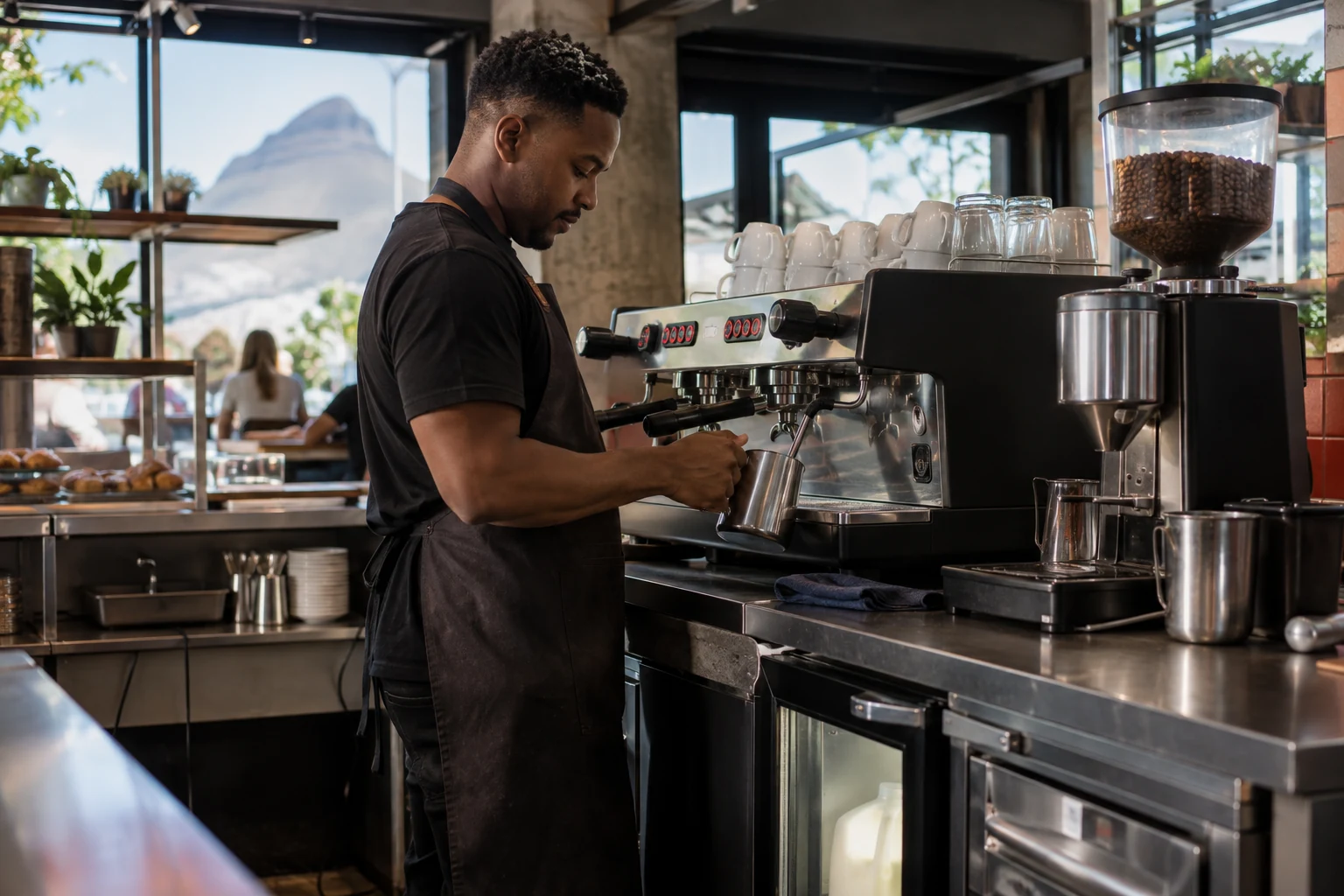
Allow counter space for the grinder, preparation tools, weighing where part of your process and used-coffee handling. A machine squeezed onto the only available counter can leave the barista without enough room to prepare drinks comfortably.
Keep milk and service items within reach
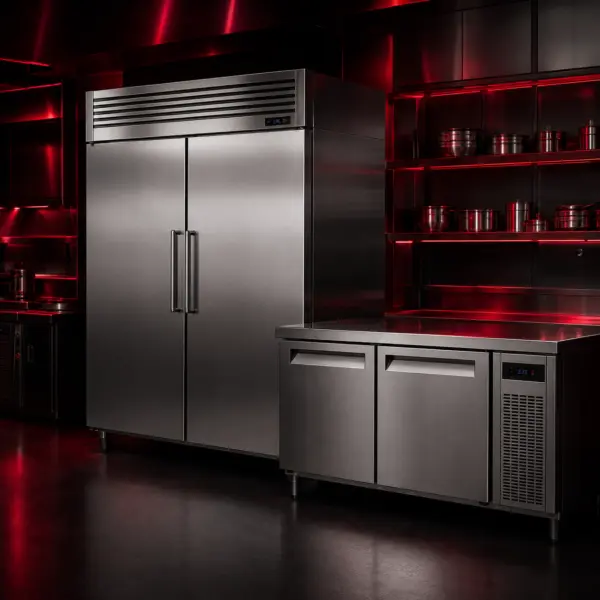
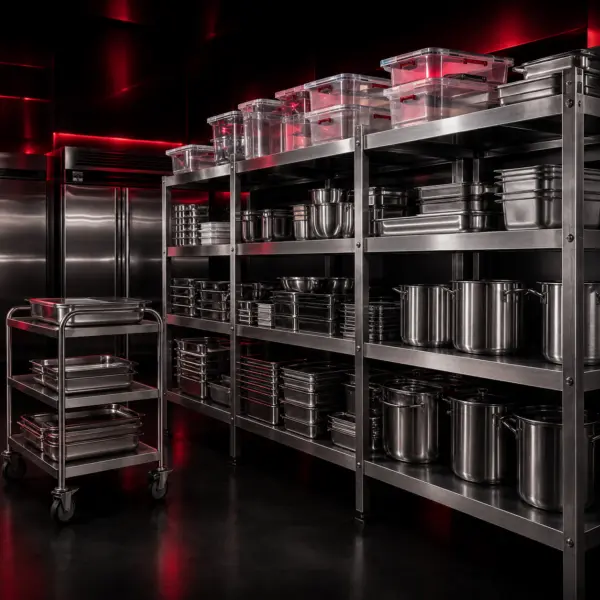
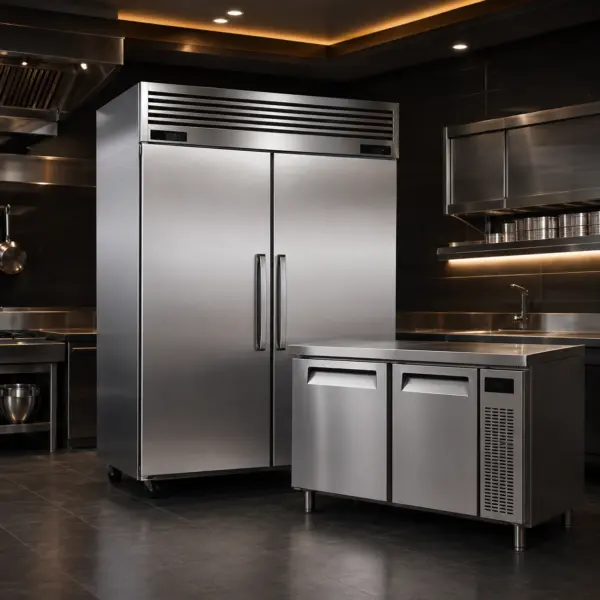
Plan appropriate refrigeration for milk and any food stored at the counter. Check the intended application and access arrangement of the selected unit rather than treating a drinks cooler as a universal food-storage solution.
Include cups, lids, utensils, cleaning tools and stock storage. Keep the handover area distinct from preparation and wash-up so completed drinks are easy to identify and customers do not crowd the working station.
Confirm water, power and drainage
Commercial espresso equipment may need a dedicated water supply, treatment and drainage arrangement, as well as a suitable electrical connection. Requirements differ by model.
La Marzocco’s installation documentation illustrates how water, drainage, counter openings and electrical services form part of the machine installation. Use the exact documentation for the equipment you choose and have the relevant installers confirm what your premises can provide.
Include the food menu and wash-up
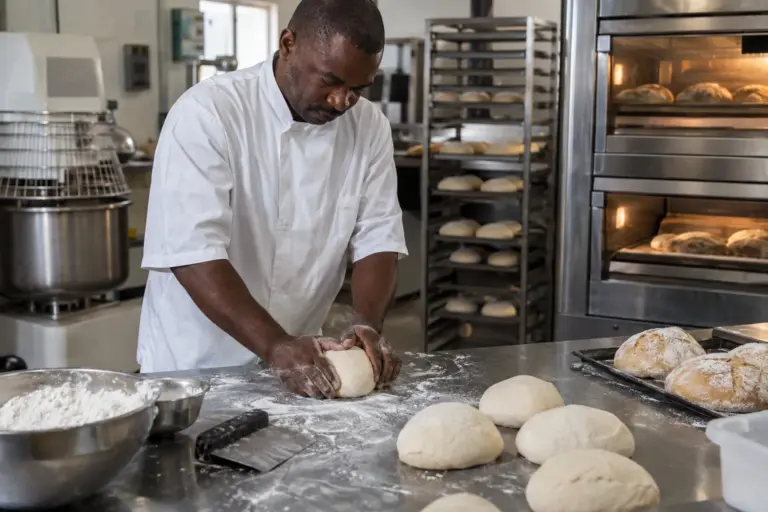
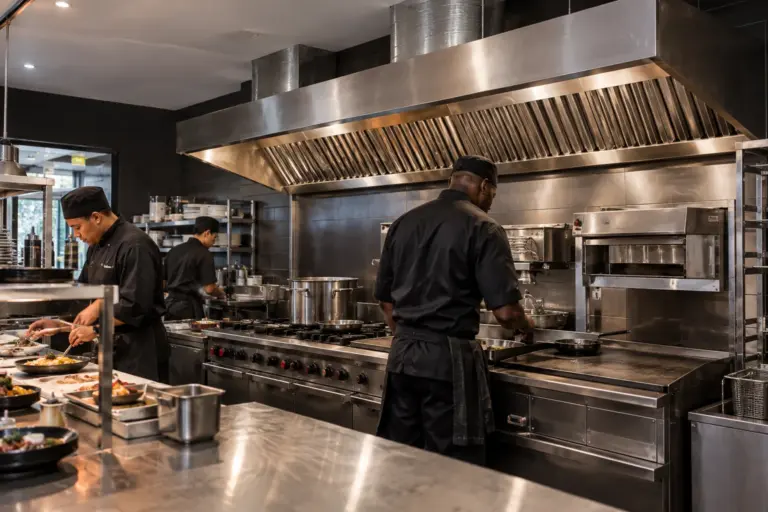
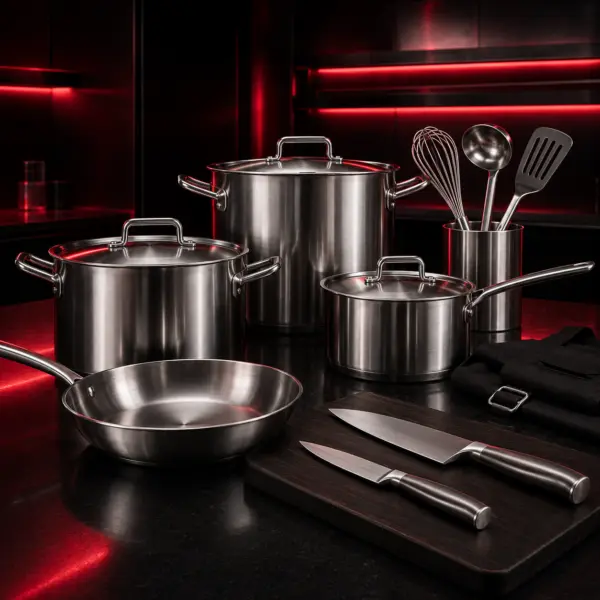
If the café serves food, list the preparation, cooking and holding equipment those dishes require. A light pastry offer is different from a cooked breakfast menu. Include suitable work surfaces and storage in the same plan.
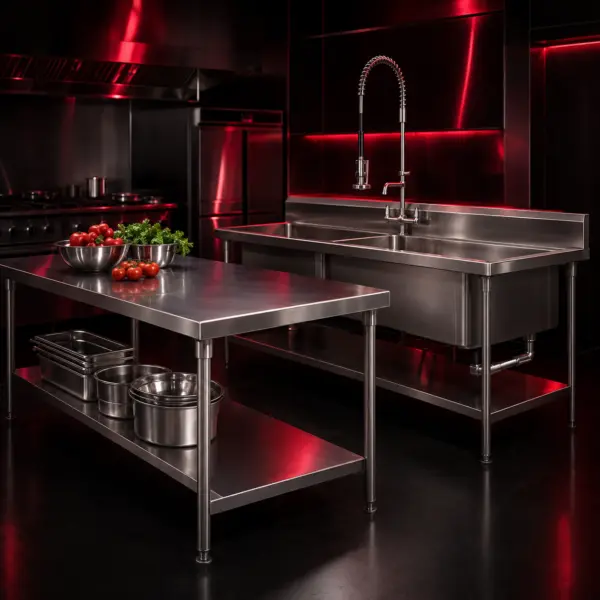
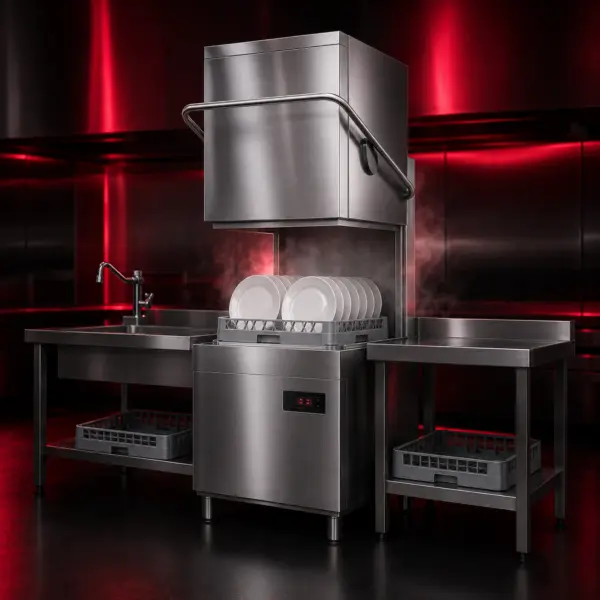
Assess how cups, crockery and utensils return and are cleaned. The wash-up route should avoid disrupting coffee preparation. Have the layout support the kitchen’s cleaning and food-handling procedures from the beginning.
A complete café quotation brief
Provide the supplier with:
- Drinks and food menus.
- Expected peak orders and the number of staff at the station.
- Counter dimensions and customer handover position.
- Machine, grinder and refrigeration requirements.
- Water, power, drainage and wash-up arrangements.
- Installation, training, included accessories and service questions.
Once those details are agreed, it becomes easier to compare equipment that supports the café’s actual service, rather than buying the most prominent machine and fitting everything else around it.
Frequently asked questions
Do I need a separate grinder for every coffee option?
That depends on the menu and service process. Discuss how additional beans or decaffeinated orders will be prepared during the rush.
Should I design the counter before selecting the espresso machine?
Develop them together. The exact machine's dimensions and service requirements must fit the working space and installation plan.
Further reading
- La Marzocco GB5 installation and operation manual
- World Health Organization: Five Keys to Safer Food
These sources provide background guidance. Check the documentation for the exact equipment you intend to buy.
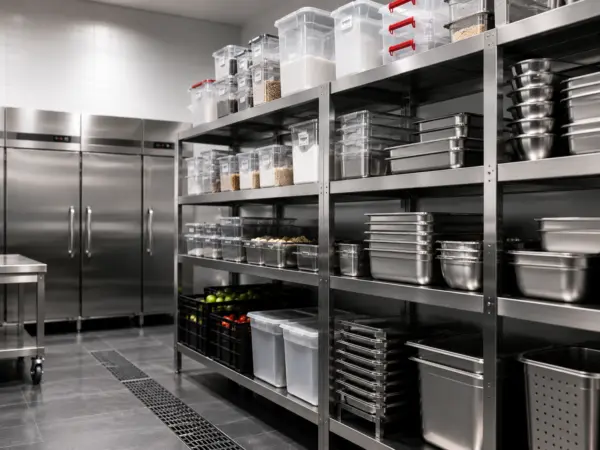
Featured image is an AI-generated illustration of a kitchen or equipment setting.