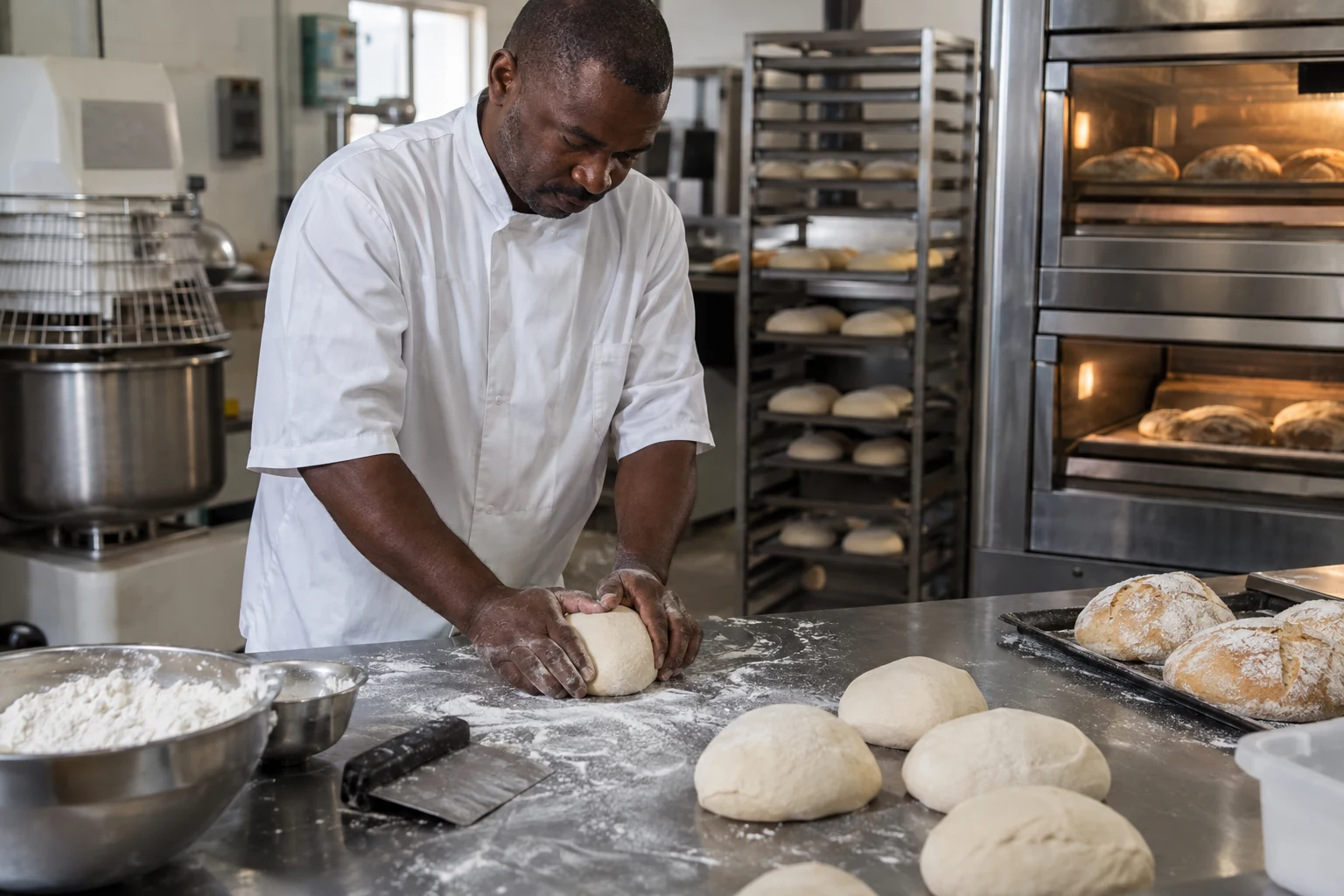
Before comparing machines, write a sample production day. Include the first mixing time, the longest fermentation or resting stage, oven batches, cooling time and packing. This reveals where equipment has to support overlapping tasks.
Start with a product and batch sheet
List each core product, dough or batter weight, number of pieces per batch and expected batches per day. Keep planned expansion separate from the opening requirement. An oven that suits tomorrow’s pastry ambition may be a poor fit for the bread you need to produce from day one.
Measure your standard trays and tins. Record whether you use a single tray format throughout or need several. The same information should appear on the oven, rack, workbench and storage specification so that trays move easily through the bakery.
Choose a mixer for the actual mixture
Do not treat bowl volume as a promise of usable dough capacity. Ask for the manufacturer’s permitted load for your dough type and the correct speed or attachment. A heavy bread dough and a light cake mixture place different demands on a machine.
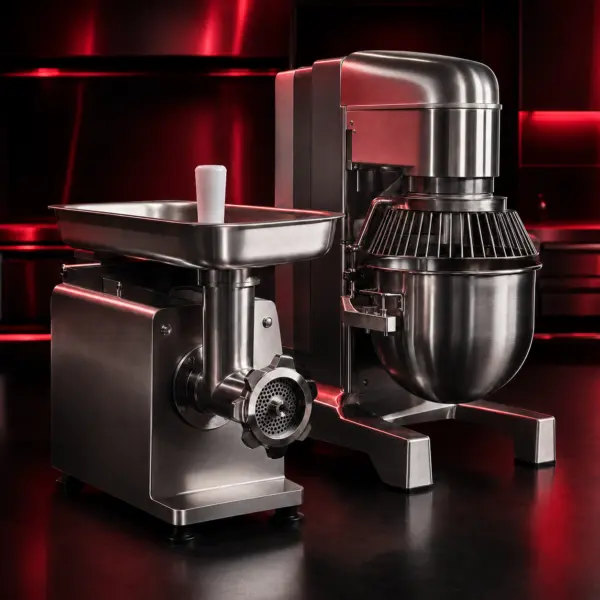
Spiral mixers are commonly designed around dough production. Planetary mixers offer different attachments for mixing tasks such as beating and whipping. The right choice depends on your product range and the specific model. If both jobs matter, compare two appropriately sized machines with one multipurpose option, including what happens when production overlaps.
Include bowl handling and cleaning in the decision. A larger batch is less useful if staff cannot transfer it safely to the next stage.
Match the oven to the whole production day
Confirm tray dimensions, shelf arrangement, intended products, available utilities and the manufacturer’s loading recommendations. Ask how the oven will fit the desired baking process, rather than choosing on the number of shelves alone.
Work through one busy day’s schedule. If every product needs the oven at the same time, additional planning or capacity may be required. If trays wait for mixing or proofing, buying a larger oven may leave the real bottleneck untouched.
Proofing and resting arrangements deserve their own line in the checklist. Decide what conditions your recipes require and how those conditions will be managed consistently in your premises.
Give cooling and finishing enough space
Hot trays need a planned destination. Provide suitable racks, room to move them and a clear route to finishing or packing. Avoid a layout where freshly baked items have to pass through incoming ingredients or a wash-up queue.
Separate ingredient storage, chilled storage where needed, weighing, dough handling and decorating as far as the premises and workflow allow. A clear work surface is valuable production capacity. Buying more machinery does not replace it.
Include the equipment that is easy to overlook
A complete bakery brief should cover:
- Ingredient containers, shelving and accurate scales.
- Appropriate mixing tools, trays, tins and racks.
- Worktables and any required refrigerated storage.
- Handwashing and wash-up facilities.
- Packing space and storage for packaging materials.
- Access, ventilation and utility requirements for each machine.
Use a qualified installer to assess connections and site services before ordering. Confirm delivery access, commissioning, staff training and local support with the quotation.
Compare a complete system
Ask each supplier to quote against the same product list, batch sheet, tray sizes and site information. Separate essential opening equipment from later additions. Record accessories and installation items explicitly, so they do not disappear between the first estimate and the final order.
The best small bakery setup is one that lets ingredients move through weighing, mixing, baking, cooling and packing without avoidable waiting. Start with that sequence, then select the machines that make it practical.
Frequently asked questions
Is a spiral or planetary mixer better for a small bakery?
It depends on the products and the specific machine. Compare dough-focused work with beating, whipping and other mixing tasks, then check the manufacturer's load limits and attachments.
Should I buy the largest bakery oven I can afford?
Only if the production schedule and site justify it. Mixing, proofing, cooling and packing may limit output before oven capacity does.
Further reading
These sources provide background guidance. Check the documentation for the exact equipment you intend to buy.
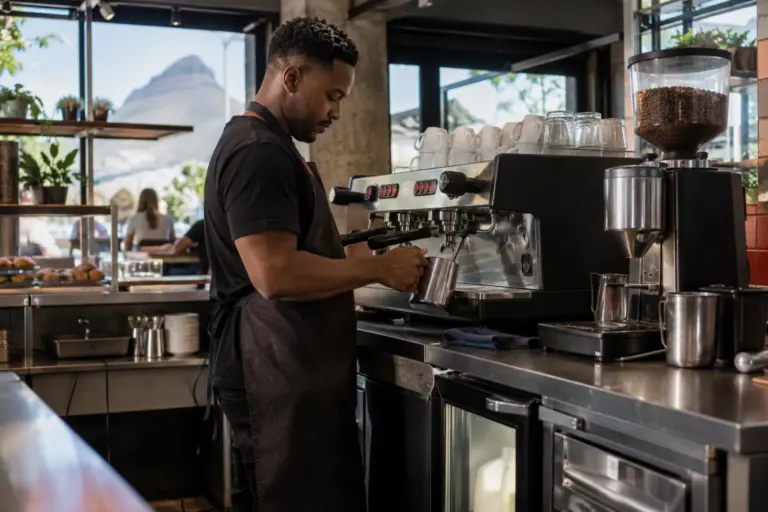
Featured image is an AI-generated illustration of a kitchen or equipment setting.