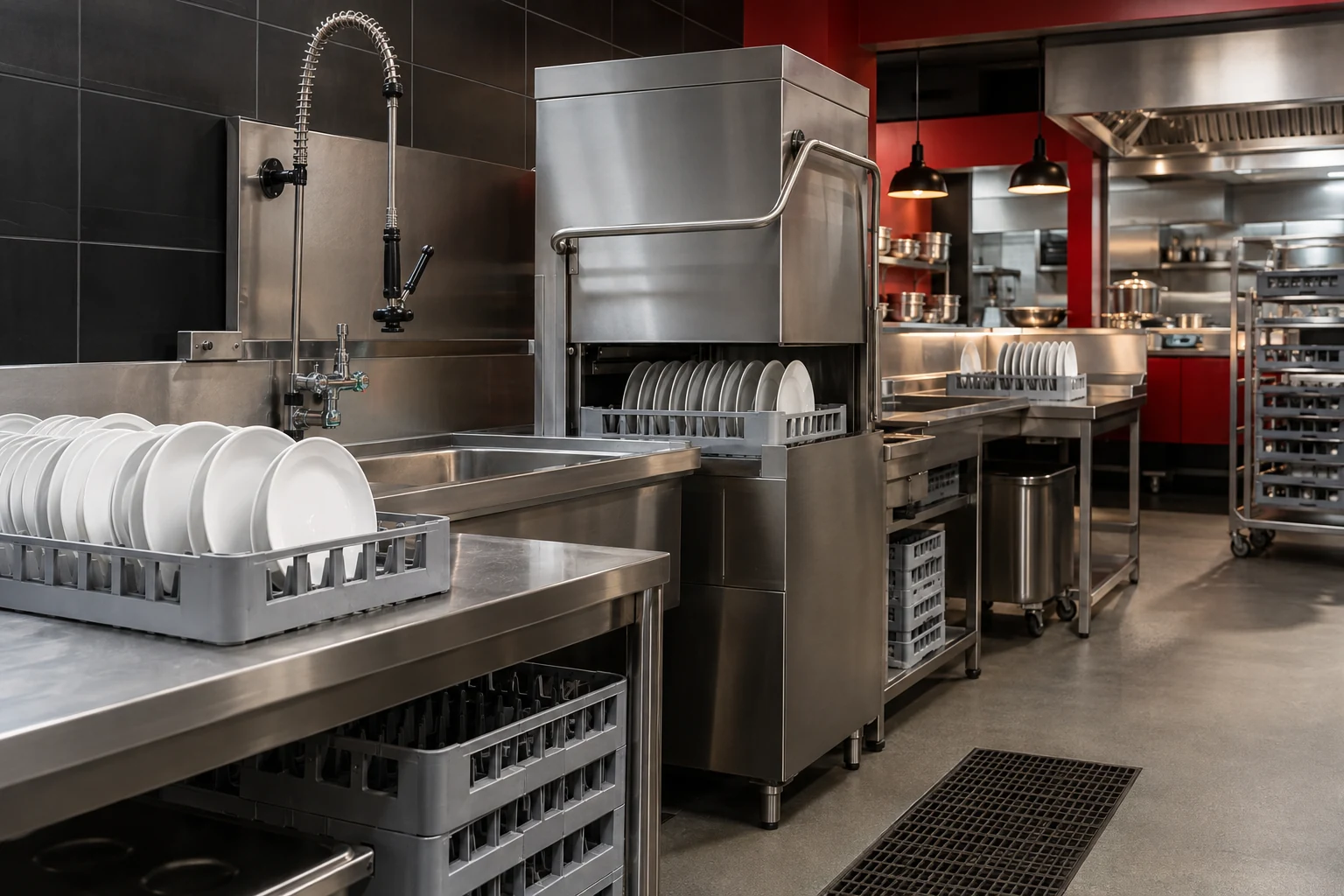
List the plates, glasses, cutlery, trays and preparation utensils the machine must handle. Then identify when the biggest volume returns from service. That peak period is the demand the wash-up area needs to manage.
Choose a format that fits the workload
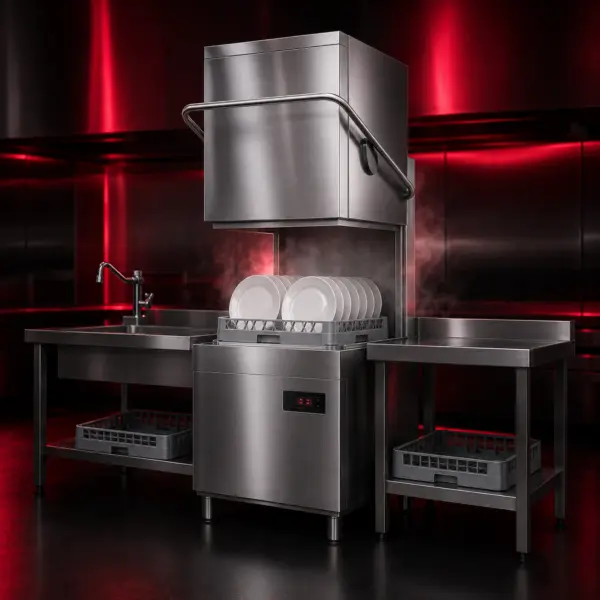
An undercounter machine can suit a compact station, while a pass-through arrangement may support a more continuous working route with tables on either side. Larger operations may need another format entirely.
Manufacturers such as Hobart distinguish between different machine types and workloads. Treat those categories as a starting point, then compare the exact model’s specification and local suitability. A machine intended primarily for glasses should not be assumed to handle every plate, tray or pot.
Turn service volume into rack demand
Count the items that return at the busy point in service and check how many fit safely in the appropriate rack. Include separate loads for items that cannot be mixed or stacked effectively.
Catalogue rack-per-hour figures need to be read alongside the stated cycle and operating conditions. Staff must also scrape, load, unload and replenish the station. The real working process can therefore differ from a machine’s theoretical cycle capacity.
Allow for preparation and clean landing space
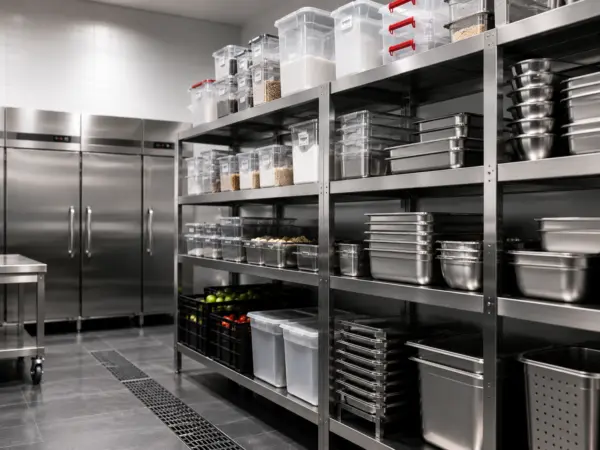
Plan a suitable scraping point, pre-rinse arrangement where required, rack storage and a place for clean items to drain or dry according to the kitchen’s procedures. Consider where staff stand and whether the door or hood opens freely.
The dirty and clean routes should be easy to understand. A faster machine will not solve a station where the same small counter must hold dirty plates, loaded racks and clean crockery at the same time.
Check all the service requirements
Confirm power supply, water pressure and quality requirements, inlet temperature where relevant, drainage and any ventilation needs. Review these with the installer for the exact machine.
Ask how detergent and rinse products are supplied or dosed, which products are approved and whether dosing equipment is included. Requirements vary between high-temperature and chemical-sanitising designs. Do not apply another model’s operating or hygiene settings to the shortlisted unit.
Keep cleaning and servicing manageable
Review the manufacturer’s instructions for filters, spray arms, cleaning, scale management and end-of-day shutdown. Staff need a clear routine and an obvious way to report poor washing results.
Ask whether the machine gives information about operating conditions and maintenance needs. Hobart’s product documentation illustrates how machine features differ, so confirm which controls and safeguards are actually present rather than assuming they are standard.
Put the whole station into the quotation
Include machine format, rack types, inlet and outlet tables, pre-rinse components, chemicals or dosing equipment, connections and commissioning. Also clarify staff instruction, warranty conditions and service access.
A complete proposal shows how dishes move through the station. That makes it easier to compare quotations and select equipment that supports the restaurant’s actual workflow.
Frequently asked questions
How do I size a commercial dishwasher?
Estimate peak returning items, convert them into suitable rack loads and include the time staff need for scraping, loading and unloading.
Is the machine price the total wash-up cost?
It may exclude tables, racks, dosing equipment, connections and installation. Ask for the complete station and clearly listed exclusions.
Further reading
These sources provide background guidance. Check the documentation for the exact equipment you intend to buy.
Featured image is an AI-generated illustration of a kitchen or equipment setting.