Start by listing the fried items on the menu and the peak order pattern. A takeaway serving repeated chip portions needs a different arrangement from a kitchen frying occasional starters.
Measure the busiest service period
Use orders from a comparable service if you have them, or build a realistic opening estimate. Record how many portions arrive together and which items have different cooking cycles. This gives you a better brief than a vague requirement for a “large fryer”.
Ask the supplier about the specific model’s intended workload and recovery performance. Do not turn a catalogue capacity figure into a guaranteed output for every food, because loading, product condition and operating practice can affect results.
Decide whether one tank or separate tanks fit the menu
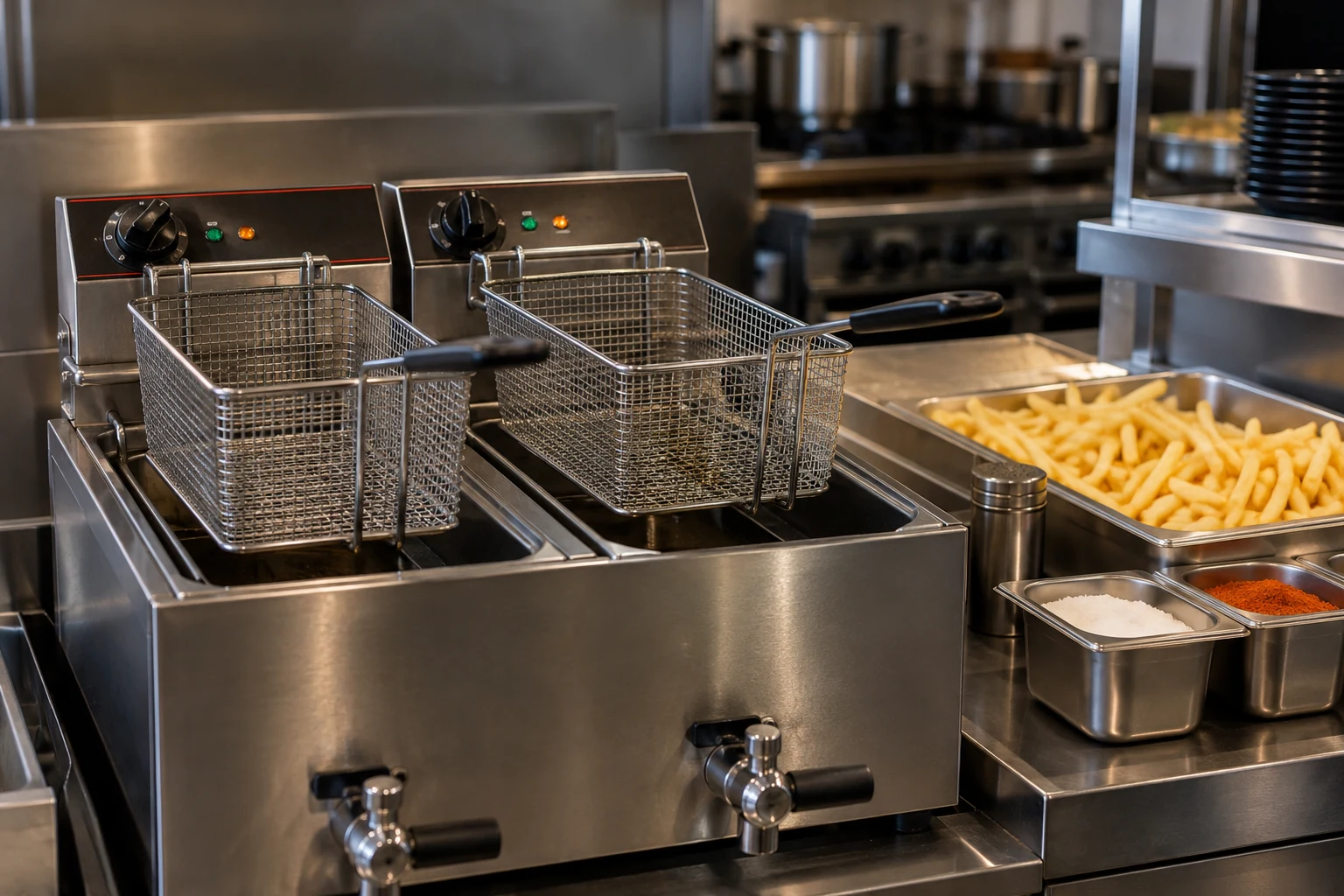
A single tank may suit a narrow frying menu. Separate tanks can help organise products with different cooking requirements or flavours. Think through which items run at the same time and how staff will handle them during a rush.
Separate tanks alone do not establish allergen control. Ingredients, handling, utensils, procedures and the suitability of the entire cooking process must be assessed before making claims to customers.
Look beyond the baskets
Check the usable basket dimensions, the working height, where baskets rest and how safely staff can move cooked food to a landing area. The frying station should include a suitable place to drain and portion food without blocking the cooking line.
Confirm which baskets, lids, stands or other accessories come with the model. Ask whether spare baskets and replacement parts can be obtained, and note any optional items in the quotation.
Confirm installation before selecting the unit
Gas and electric fryers can have different site requirements. Check the exact power or gas specification, required clearances and extraction arrangement with the relevant qualified installers.
The Anvil equipment catalogue provides model-specific specifications rather than a single connection requirement for all fryers. Use the chosen model’s current documentation when confirming the site. Delivery access and the final position matter just as much as the appliance’s footprint.
Make oil care and cleaning practical
Ask how oil is drained or removed for the selected fryer and whether filtration is built in, optional or handled separately. Review access to the tank and components staff are expected to clean.
Follow the manufacturer’s process for cooling, isolation, cleaning and approved products. Plan who performs those tasks, where the equipment can be accessed and how staff record issues. A station that is difficult to clean is more likely to be neglected during a busy week.
Build the complete fryer enquiry
Include the following when asking for a recommendation:
- Main fried products and expected peak portion demand.
- Batch sizes and the items that cook simultaneously.
- Preferred tank arrangement and basket dimensions.
- Available site services and extraction.
- Landing space, cleaning access and oil-handling requirements.
- Included accessories, delivery and commissioning scope.
The best fryer specification describes the whole task, from loading to serving and cleaning. That makes the supplier’s recommendation easier to assess and helps avoid a unit that looks adequate on paper but creates delays in service.
Frequently asked questions
Does a bigger oil tank always mean more output?
No. Output also depends on the appliance's heating and recovery performance, the food being cooked and how it is loaded. Compare the full specification.
Should I choose gas or electric for a fryer?
Check the required workload and the available site services, then compare the exact models and their installation scope.
Further reading
These sources provide background guidance. Check the documentation for the exact equipment you intend to buy.
Featured image is an AI-generated illustration of a kitchen or equipment setting.