Before browsing models, list the ingredients you keep chilled, the containers they arrive in and how often deliveries take place. Include the volume held between deliveries and the smaller quantity needed within reach during service.
Choose the refrigeration format for the job
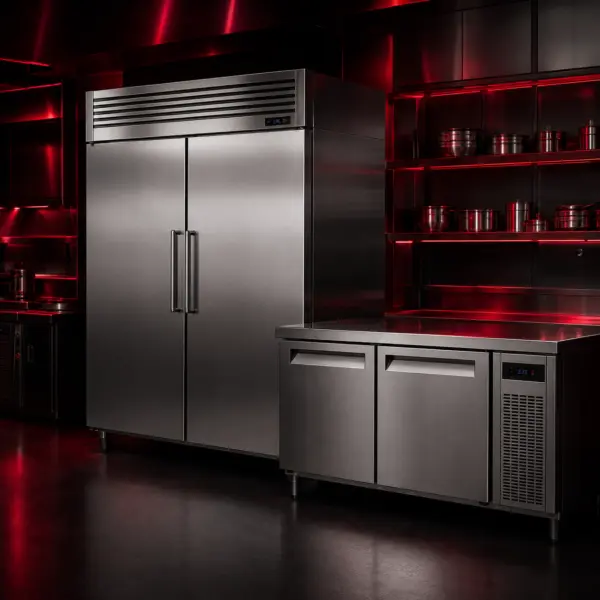
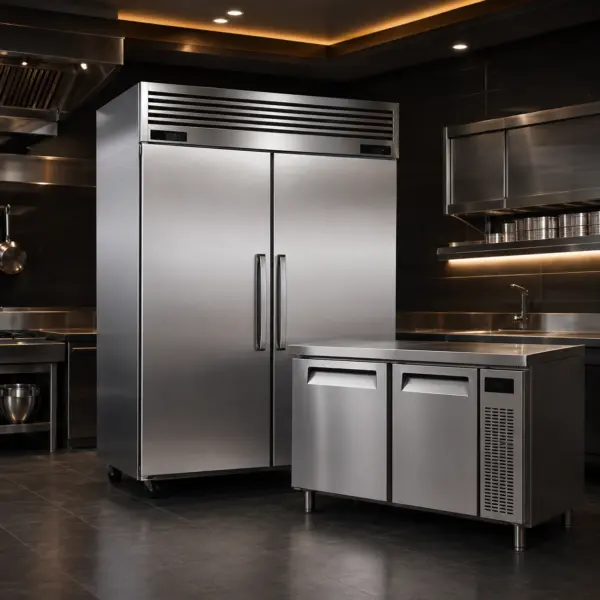
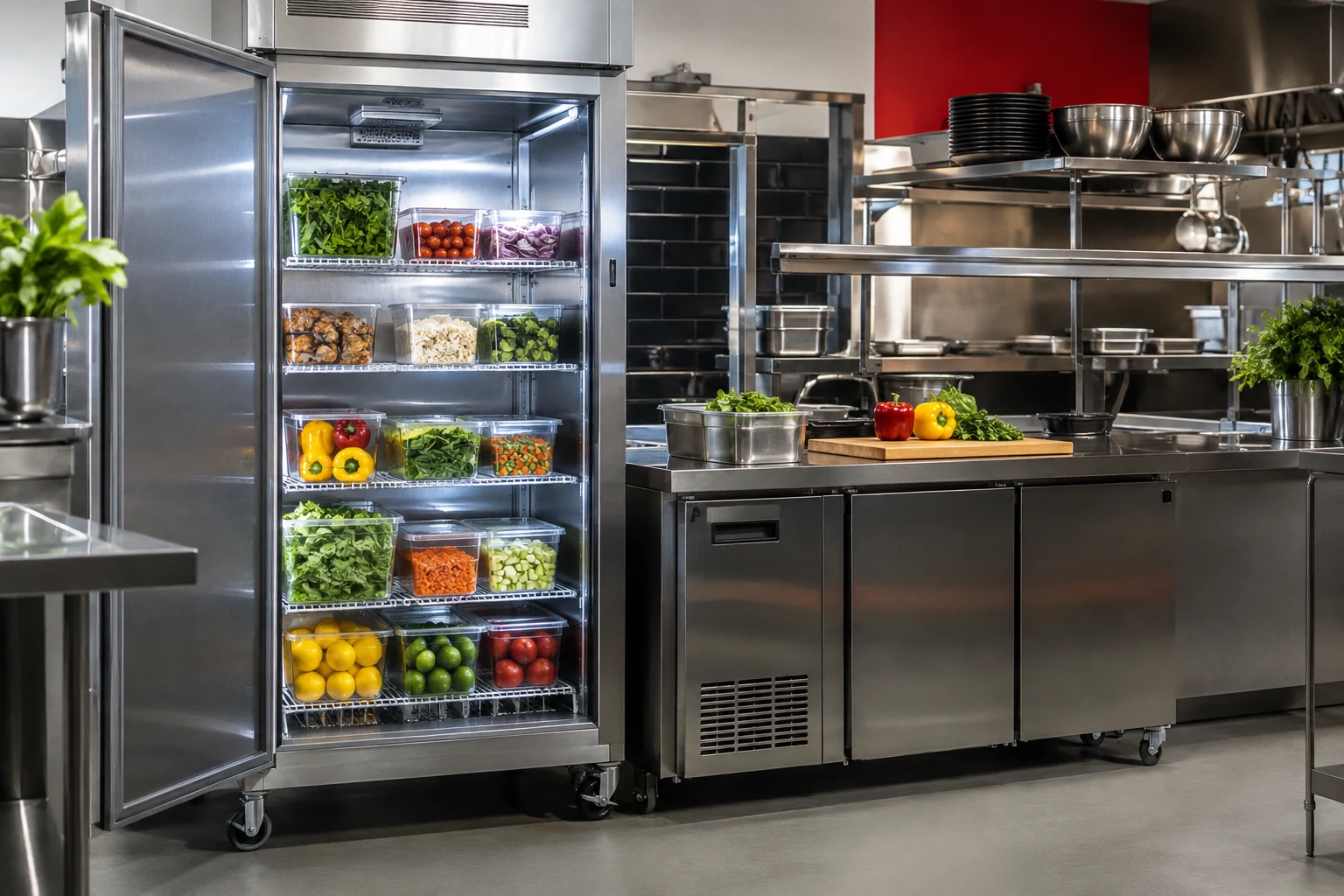
An upright cabinet suits general storage where staff can access several shelves. An undercounter fridge can support a workstation without adding a separate cabinet in the aisle. A preparation counter may combine chilled storage with a working surface, subject to the particular unit’s design.
Display and beverage refrigeration serve different purposes. Do not assume a glass-door drinks cooler has the same intended use as a food-storage refrigerator. Check the manufacturer’s application and temperature specifications for the model being considered.
Compare usable space, not only litres
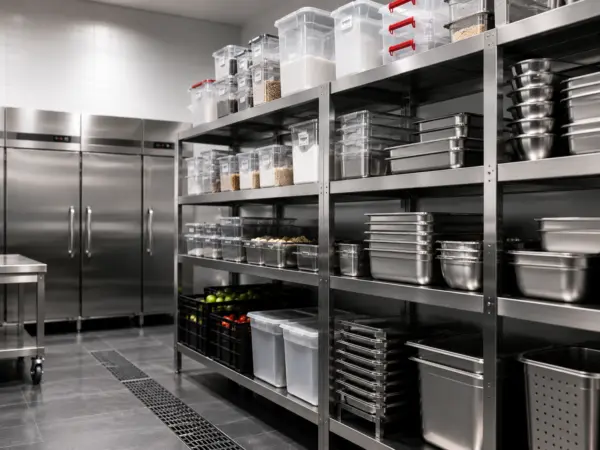
Make a simple inventory of your largest trays, tubs, bottles and food containers. Ask how many fit on each shelf and whether the shelf spacing can be changed. Deep cabinets can offer impressive nominal capacity but become awkward if staff cannot see or reach what sits behind the first row.
Consider the daily rotation of stock. Clearly separated containers and accessible shelves make it easier to identify ingredients and avoid unnecessary searching. Leave the air paths required by the manufacturer clear instead of filling every gap.
Think about door openings during the busiest hour
Place the fridge where the main user can reach it without blocking another workstation. Check which way the doors open and whether a drawer or door can be fully opened with people working opposite.
A busy prep station may benefit from several smaller access points, while a central store may suit an upright cabinet. The right answer depends on how often staff need ingredients, how the food is packed and whether access happens before service or throughout it.
Confirm the operating environment
Refrigeration equipment must be selected for the conditions in which it will operate. Ask about the model’s specified ambient operating conditions, required clearances and air inlet and outlet positions. A cabinet enclosed tightly between counters may not have the ventilation its design requires.
Also check power requirements, drainage where applicable, cleaning access and the delivery route. Kitchen heat, proximity to cooking equipment and the installation position should be discussed before the final specification is accepted.
Include maintenance in the buying decision
Ask how staff should clean the interior, what door seals should look like when inspected and which tasks belong to a technician. Establish how temperature checks fit into the kitchen’s food-safety procedures rather than relying only on a quick glance at a display.
The WHO’s safe-food guidance includes keeping food at appropriate temperatures. Equipment selection, monitoring and correct handling work together; buying a fridge alone does not establish a complete food-safety process.
Questions to send with your fridge enquiry
- What food or drinks will the cabinet store?
- What containers and shelf spacing must it accommodate?
- How much stock is kept between deliveries?
- How often will the door open during service?
- What are the site conditions, access route and available services?
- What clearances, installation steps and maintenance are required?
Compare quotations on those answers as well as the price. The goal is a refrigerator that fits the ingredients, the workflow and the premises throughout its working life.
Frequently asked questions
Is an undercounter fridge better than an upright fridge?
They serve different layouts. Undercounter units suit ingredients at a workstation; upright cabinets can offer accessible bulk storage. Match the format to the task.
Can I install a fridge inside a tight cabinet opening?
Only when the manufacturer's installation requirements allow it. Confirm ventilation, service access and door clearance for the exact model.
Further reading
These sources provide background guidance. Check the documentation for the exact equipment you intend to buy.
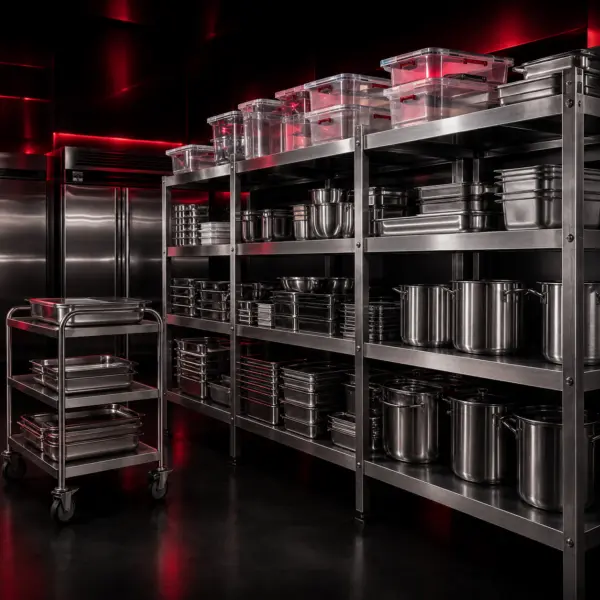
Featured image is an AI-generated illustration of a kitchen or equipment setting.