Start with a list of ice uses: drinks, beverage presentation or another task the chosen model is intended to support. Estimate the busiest period and include other departments that draw from the same supply.
Separate daily demand from peak demand
Record how much ice is used across a typical operating day and when the largest draw takes place. A venue can use a moderate total amount but still need a well-stocked bin at the beginning of a concentrated rush.
Discuss the production rating and the conditions under which it is stated. Ask how the selected machine performs under the expected site conditions. Do not assume that every published rating represents output in any room or at any water temperature.
Choose an ice type for its actual purpose
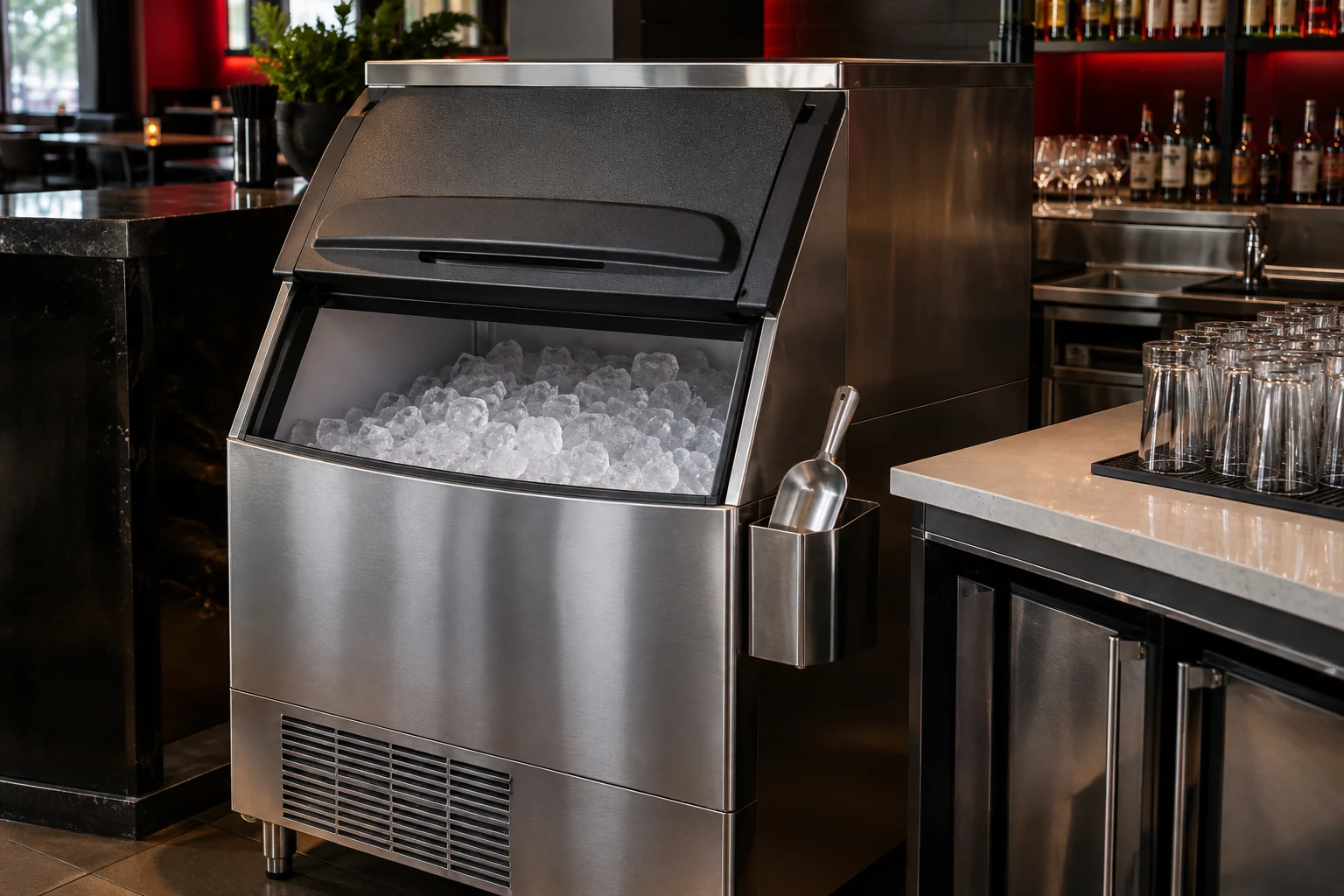
Ice comes in different formats. Shape, size and texture can influence serving, storage and presentation. Ask which format suits your drinks or application and confirm what the shortlisted machine produces.
If replacing an existing unit, take a sample photograph or describe the required ice clearly. A familiar description such as “cubes” can still refer to different formats, so clarify the exact output before the order is confirmed.
Match the storage arrangement to service
Check the bin’s usable storage, access height and position. Staff should be able to collect ice without blocking another workstation. Confirm whether the machine includes its storage arrangement or whether the bin is a separate item.
Plan hygienic handling with the appropriate scoop and storage method. The WHO’s safe-food guidance includes safe water and raw materials; ice used with food and drinks needs to be handled as part of that process.
Assess water, drainage and ventilation
Ask for the selected model’s water supply, water-quality, drainage and clearance requirements. Have the installer assess the available services and the proposed position.
Keep the required ventilation paths clear. An enclosed or poorly ventilated position may be unsuitable for a particular design. Water treatment should be selected against the manufacturer’s requirements and the site’s water conditions, rather than added as an unspecified accessory.
Plan cleaning and replenishment
Request the manufacturer’s instructions for cleaning, sanitising, filter care and scheduled service. Identify which tasks staff carry out and which belong to a technician. Cleaning intervals should follow the actual unit’s instructions and the venue’s procedures.
Also consider how the venue handles interruptions to its ice supply. If service depends heavily on ice, record the practical contingency and the person responsible for acting when the unit is not producing normally.
Your ice-machine enquiry checklist
Provide expected daily and peak demand, the required ice format, the storage arrangement and the intended position. Include available water and drainage, room conditions, delivery access and any counter or cabinet constraints.
Ask for a proposal that specifies production conditions, storage, included accessories, installation and servicing. That gives you a clearer picture of the whole system and helps prevent a machine from being selected on one headline number.
Frequently asked questions
Is daily ice production the same as storage capacity?
No. Production describes how much a machine can make under stated conditions; storage describes how much the bin can hold. Both need to fit your service pattern.
Can an ice machine be installed anywhere near a tap?
The selected model also has drainage, ventilation, clearance and water-quality requirements. Have the proposed position assessed before ordering.
Further reading
These sources provide background guidance. Check the documentation for the exact equipment you intend to buy.
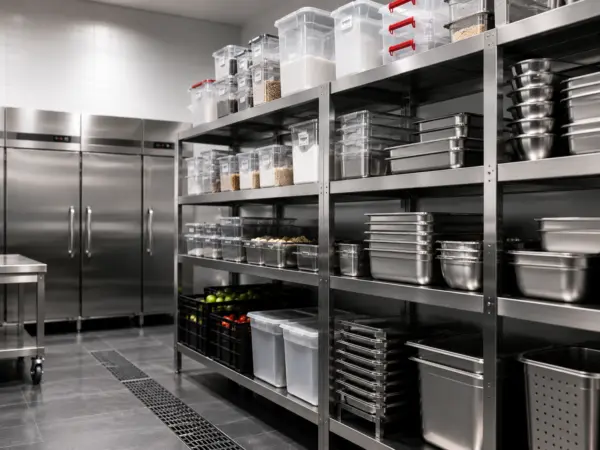
Featured image is an AI-generated illustration of a kitchen or equipment setting.