Write down the ingredients, desired finish and quantities you need each day. Then look for equipment and attachments that match those tasks.
Separate bowl work from vegetable preparation
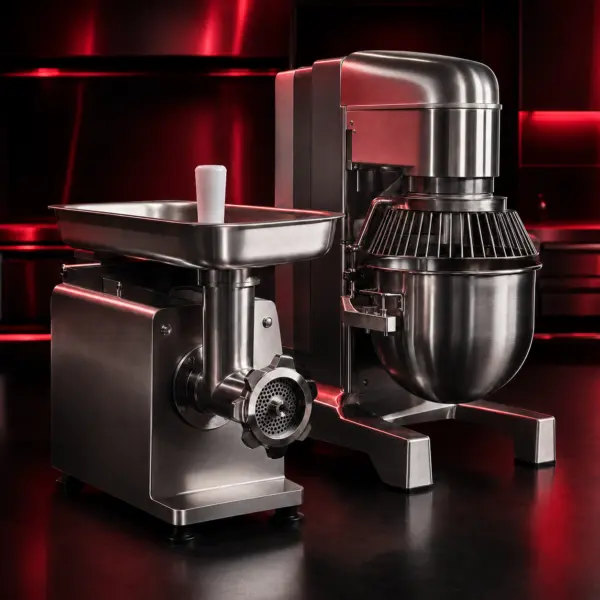
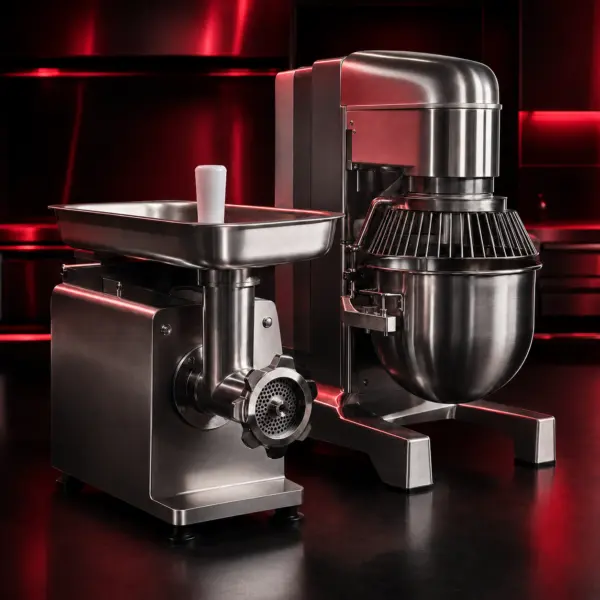
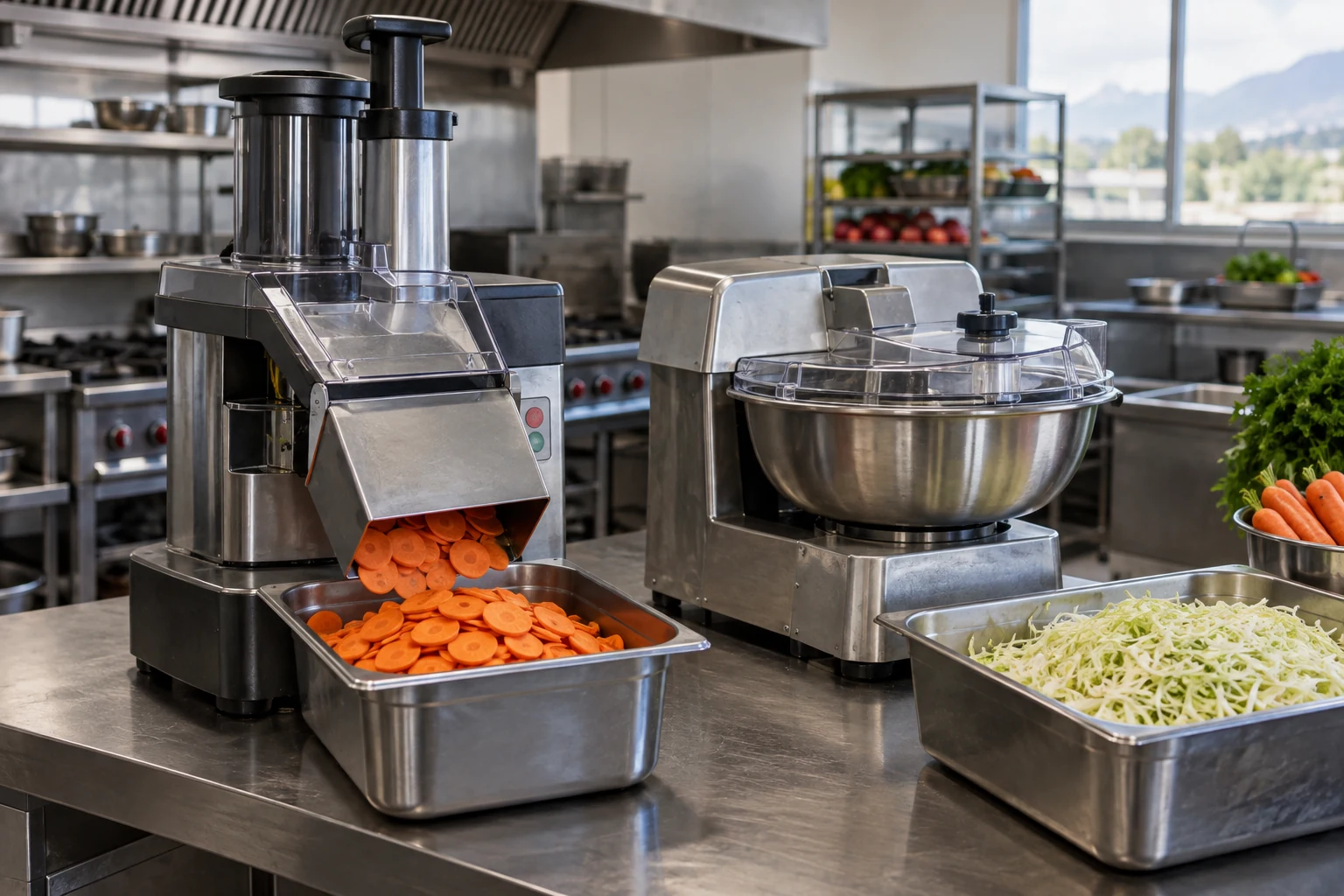
Bowl cutters are commonly used for tasks such as chopping, emulsifying or preparing mixtures. Vegetable preparation machines use appropriate discs or attachments for jobs such as slicing, grating and dicing, depending on the model.
Combination machines may support more than one function. Check the precise equipment supplied and what must be purchased separately. A picture of a machine with several attachments is not a complete accessory schedule.
Ask the supplier to confirm that the model and tooling can produce your required finish on your actual ingredients. Fine slicing, coarse grating and a particular dice are separate requirements.
Specify output and batch size
Describe how much product you need in a prep session and how much space it occupies. For bowl work, ask about the usable load for the mixture, rather than treating total bowl volume as guaranteed capacity.
For continuous vegetable preparation, consider loading, receiving containers and changeovers. Staff still need to prepare the ingredient, feed the machine as intended and move the finished product to its next stage.
A production rating can help compare suitable machines, but it should be interpreted in context. Ingredient type, tooling, the finish required and the operator’s workflow affect practical output.
Check the attachment list carefully
Make a written schedule of the blade, bowl, discs and other tools required. Confirm compatibility with the exact machine, the finished cut size and what is included in the price.
Think about changeovers during a shift. If staff prepare several ingredients in sequence, the process should allow the right cleaning and handling between them. More attachments only help when the kitchen has a clear place to store and identify them.
Ask how replacements are ordered. Record the machine version and part information so that a future purchase does not depend on matching a photograph.
Plan a safe, usable prep station
Check the footprint, operating height, feed arrangement, access around the machine and the space required for receiving containers. The workbench should suit the equipment and the manufacturer’s requirements.
Identify the power supply and have any required connection assessed by a qualified person. Keep the location clear of avoidable water exposure or awkward cable routing.
Staff must use the supplied safety arrangements and follow the manual. Guards, lids and feed tools are part of the operating method. A buying decision should include whether the team can use the machine comfortably as intended.
Include cleaning time in the comparison
Look at how the manufacturer says the machine and attachments must be cleaned. Confirm which components can be removed by the user and any restrictions on washing methods.
Compare the complete prep session: assembly, ingredient preparation, processing, changeover, cleaning and storage. A machine that runs quickly may still create a bottleneck if the rest of the workflow is awkward.
Arrange suitable handling and storage for sharp attachments. Do not leave discs loose in a sink or mixed into a drawer where they are hard to identify safely.
Prepare a useful quotation brief
Send the supplier a short task sheet with ingredient examples, required cuts, daily quantities, bowl batch sizes, available workspace and utilities. Include the attachment schedule and ask for commissioning or training details where available.
Munaaz can help you compare food preparation options against that brief. The goal is a machine that performs the jobs you need, fits the prep area and remains practical to clean and support throughout its working life.
Frequently asked questions
Can one food processor chop mixtures and slice vegetables?
Some combination machines support both functions, but the model and supplied attachments must be checked. Confirm the required tasks and tooling before ordering.
Is bowl volume the same as processing capacity?
No. Ask for the manufacturer's usable load for the ingredient or mixture you intend to process, including any relevant operating limits.
Further reading
These sources provide background guidance. Check the documentation for the exact equipment you intend to buy.
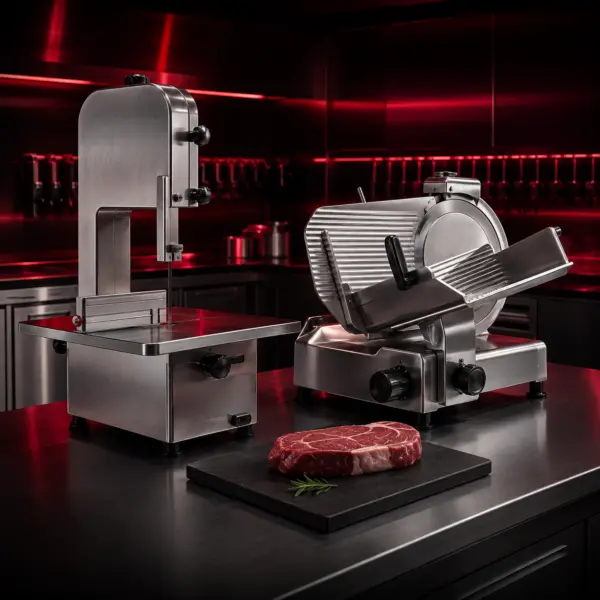
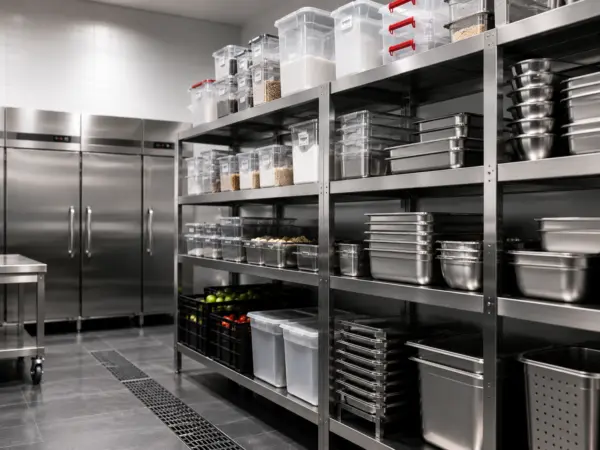
Featured image is an AI-generated illustration of a kitchen or equipment setting.