This guide focuses on finding avoidable waste. It does not promise a percentage saving: actual results depend on the equipment, tariff, menu, workload and condition of the site.
Make an equipment and operating-time list
Record each major appliance, its function, the hours it runs and who starts or shuts it down. Mark equipment that must operate continuously, such as refrigeration protecting stored food. Distinguish that from appliances which can follow a service schedule under the manufacturer’s instructions.
Walk through the kitchen before opening, between services and after closing. Look for equipment running with no planned task, doors left open, obvious damaged seals and settings changed without a clear reason.
Ask staff what slows them down. An appliance may be left running because reheating or restarting interrupts service. Understanding that constraint helps you change the schedule without creating a new operational problem.
Measure before choosing a replacement
Nameplate power tells you about an appliance’s rated electrical demand. It does not, by itself, tell you the cost of a day’s work. Actual operating cycles, standby behaviour and production load matter.
For a replacement, compare the same task at a similar output. Request available manufacturer performance data and explain your expected usage. An efficiency certification can be a useful comparison where applicable, but check the exact model. Do not assume an entire brand or every item in a product range carries the same certification.
Use electricity bills and suitable measurement, arranged by a competent professional where needed, to establish a baseline. Compare equivalent production periods after a change. A lower bill during a quiet month is not enough to prove that a machine is more efficient.
Give refrigeration a clear operating routine
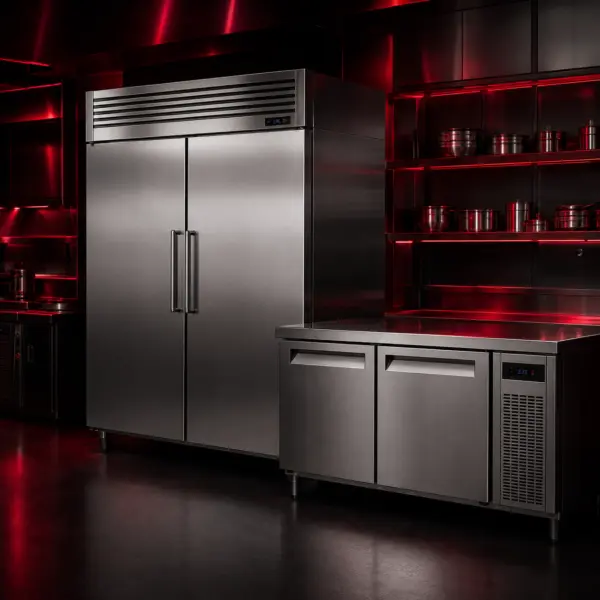
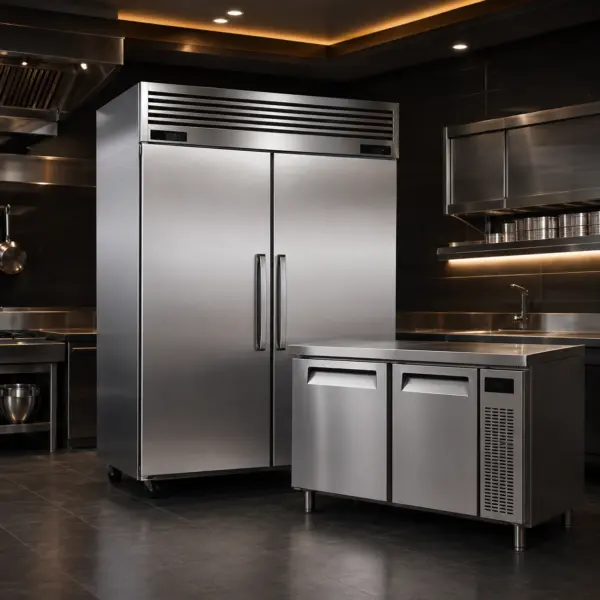
Keep access brief and organise stored items so staff can find them quickly. Report poor door closure and damaged seals. Follow the manufacturer’s instructions for ventilation space, cleaning and servicing; do not block required airflow with stock or packaging.
Place equipment with site conditions in mind. Ask the supplier to assess ambient conditions and nearby heat sources rather than assuming a refrigerator will perform the same way in every location.
Food safety remains the priority. Do not switch off occupied refrigeration or relax safe storage controls to reduce consumption. Investigate unnecessary loading or operating problems instead.
Schedule cooking and washing around demand
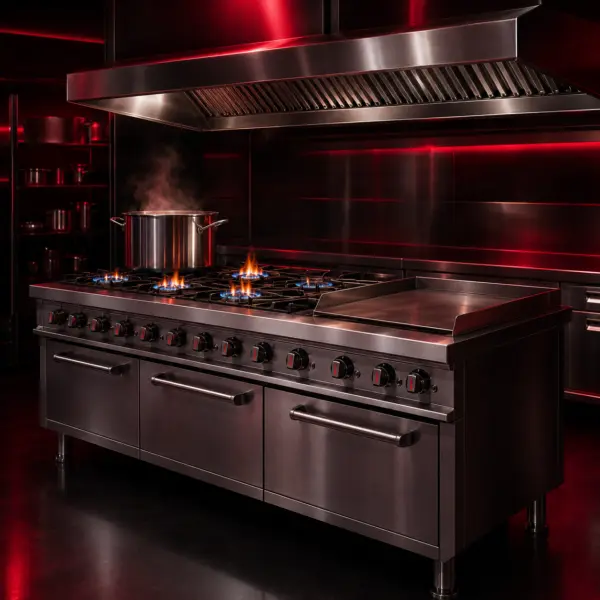
Plan preheating to match the equipment and the first production task. Where the manual permits, review whether every appliance needs to start at the beginning of a shift. Use an agreed shutdown checklist so the decision does not depend on someone remembering at the end of a long service.
For dishwashing, organise the wash-up area so racks can be loaded appropriately and cycles used as intended. Clear filters and complete the approved cleaning routine. Running repeated poor loads can waste time as well as utilities.
Avoid informal changes to gas, electrical or ventilation controls. Any adjustment affecting safe operation belongs with a qualified professional.
Treat maintenance as part of efficiency
An appliance with a recurring fault may consume resources without completing work properly. A documented maintenance routine helps spot the change earlier. Include cleaning tasks approved by the manufacturer, visible condition checks and a route for reporting faults.
Keep a simple log of performance problems, repairs and unusually long production cycles. This is more useful when assessing replacement than a general impression that a machine is “old.”
Prioritise changes that protect service
Choose one manageable change at a time, such as a clearer shutdown routine or better refrigerator organisation. Assign responsibility and review the result. Staff should know the reason for the change and the safe limits.
When the time comes to invest, send Munaaz your equipment list, daily workload, site information and replacement priorities. Compare operating suitability alongside purchase price, support and installation. A well-chosen machine should fit both your service and the way your kitchen actually works.
Frequently asked questions
Does a lower power rating always mean lower running costs?
No. Compare the energy needed to complete a similar task, including operating time and standby behaviour. A power rating alone is not a daily cost estimate.
Can refrigeration be switched off overnight to save energy?
Occupied food refrigeration should remain under appropriate safe storage controls. Follow the manufacturer's instructions and investigate waste without compromising food safety.
Further reading
These sources provide background guidance. Check the documentation for the exact equipment you intend to buy.
Featured image is an AI-generated illustration of a kitchen or equipment setting.